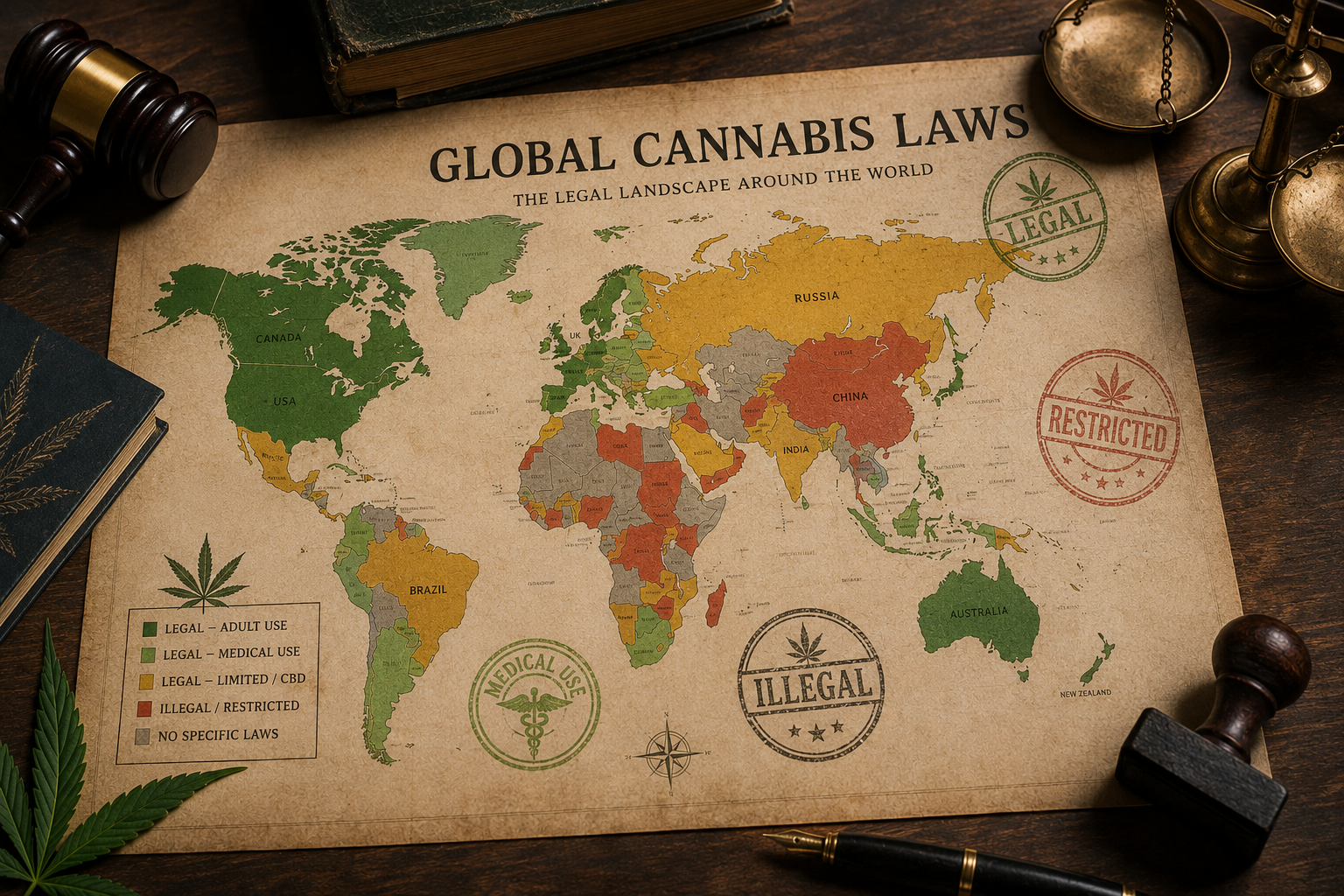
Canada, Uruguay and roughly two dozen U.S. states have full adult-use frameworks. Germany, Thailand and Australia allow medical access with tightly controlled prescribing. Portugal decriminalised personal possession of all drugs in 2001 without legalising sale. Every model has trade-offs.
What we learn from other countries
The lesson from twenty years of international experiments is not that legalization is a panacea. It is that a good policy is one that separates the recreational, medical, industrial and ritual conversations — and then designs distinct rules for each.
"There is no perfect model. But there are much better models than pretending the plant does not exist."
Where India could learn most
Germany and Uruguay, arguably. Both slow, both cautious, both grounded in public health infrastructure. Neither is a template — but both are studies in how a democracy can move a taboo conversation forward without losing the plot.